Timber retaining walls: why they rot, and what to replace them with
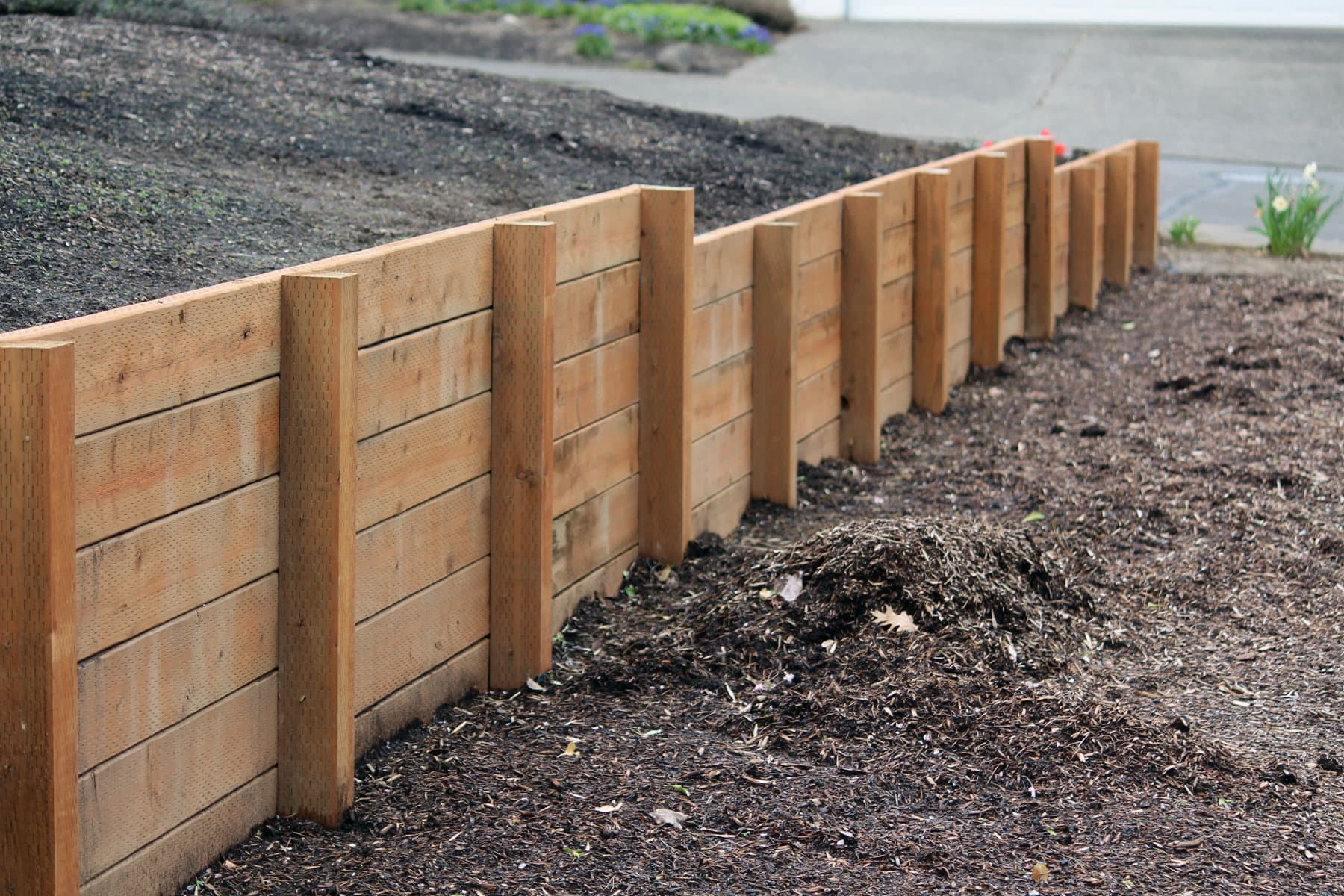
Drive through any older Surrey neighbourhood and you'll spot them: timber retaining walls built in the 80s and 90s, now leaning, greying, and soft. Wood was cheap and quick back then, but it was never going to last in our climate. If you've got one, here's what's happening and what to do about it.
Why timber walls rot out here
The pressure-treated lumber used on most of these walls wasn't rated for permanent ground contact, and even the stuff that was has limits. A retaining wall keeps one whole face pressed against wet soil for its entire life. In a place with long wet winters, that means the wood is damp most of the year. Damp wood plus soil plus time equals rot, and it rots from the inside and the buried face first, where you can't see it.
How long do they last?
Most timber walls in this region give you somewhere around 15 to 25 years before they're done. Some go sooner if the drainage was poor or the wood was low grade. By the time the face looks rough, the buried tie-backs and the bottom courses are usually further gone than the parts you can see.
Signs your timber wall is done
- Wood that's soft enough to push a screwdriver into, or that's visibly spongy.
- The wall leaning forward, or individual timbers bowing out.
- Cracked, split, or twisted timbers, especially near the base.
- Soil washing out through gaps between the wood.
- The dead-man tie-backs (the buried anchors) rotted through, so the wall has nothing holding it back.
What to replace it with
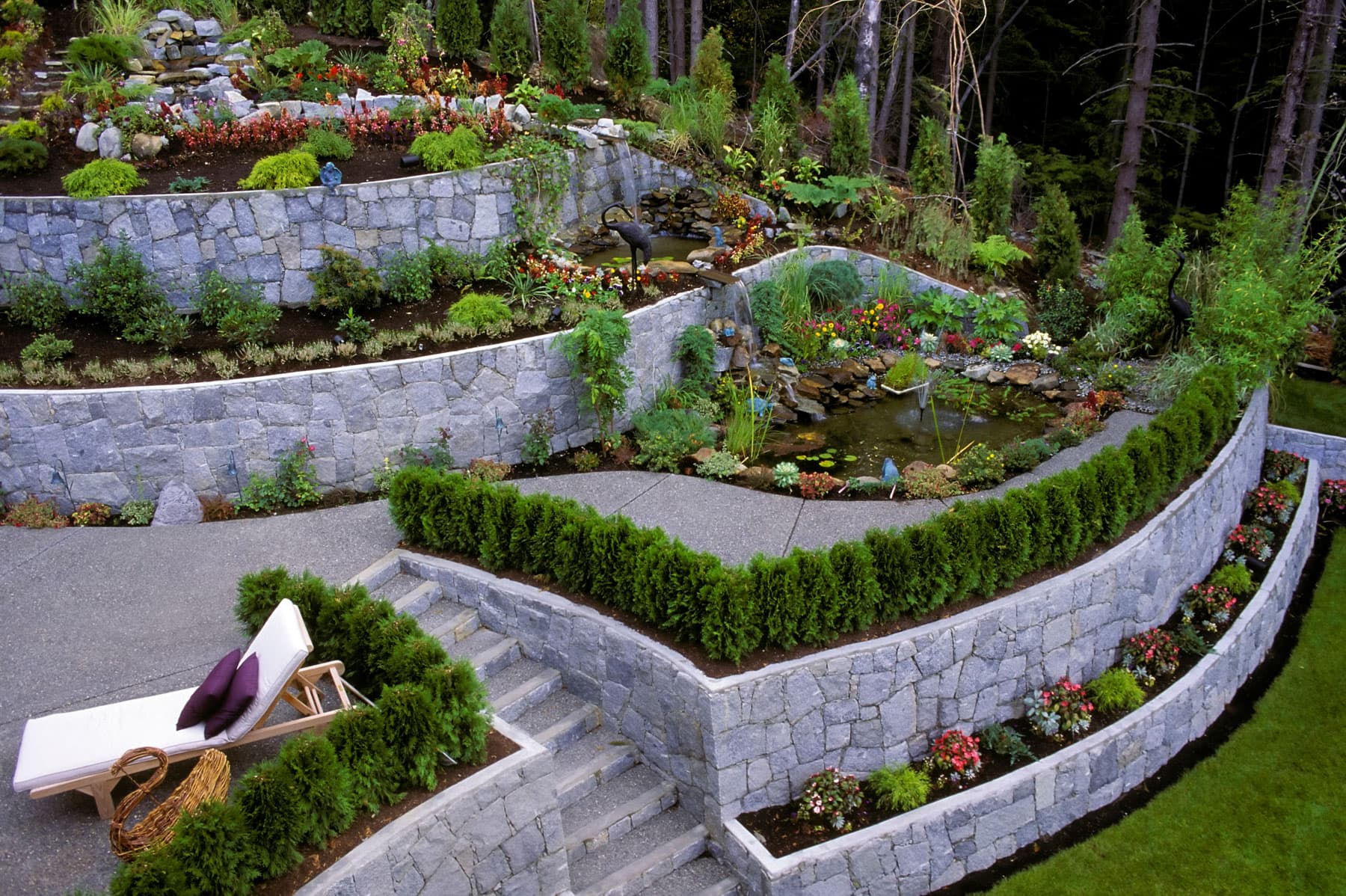
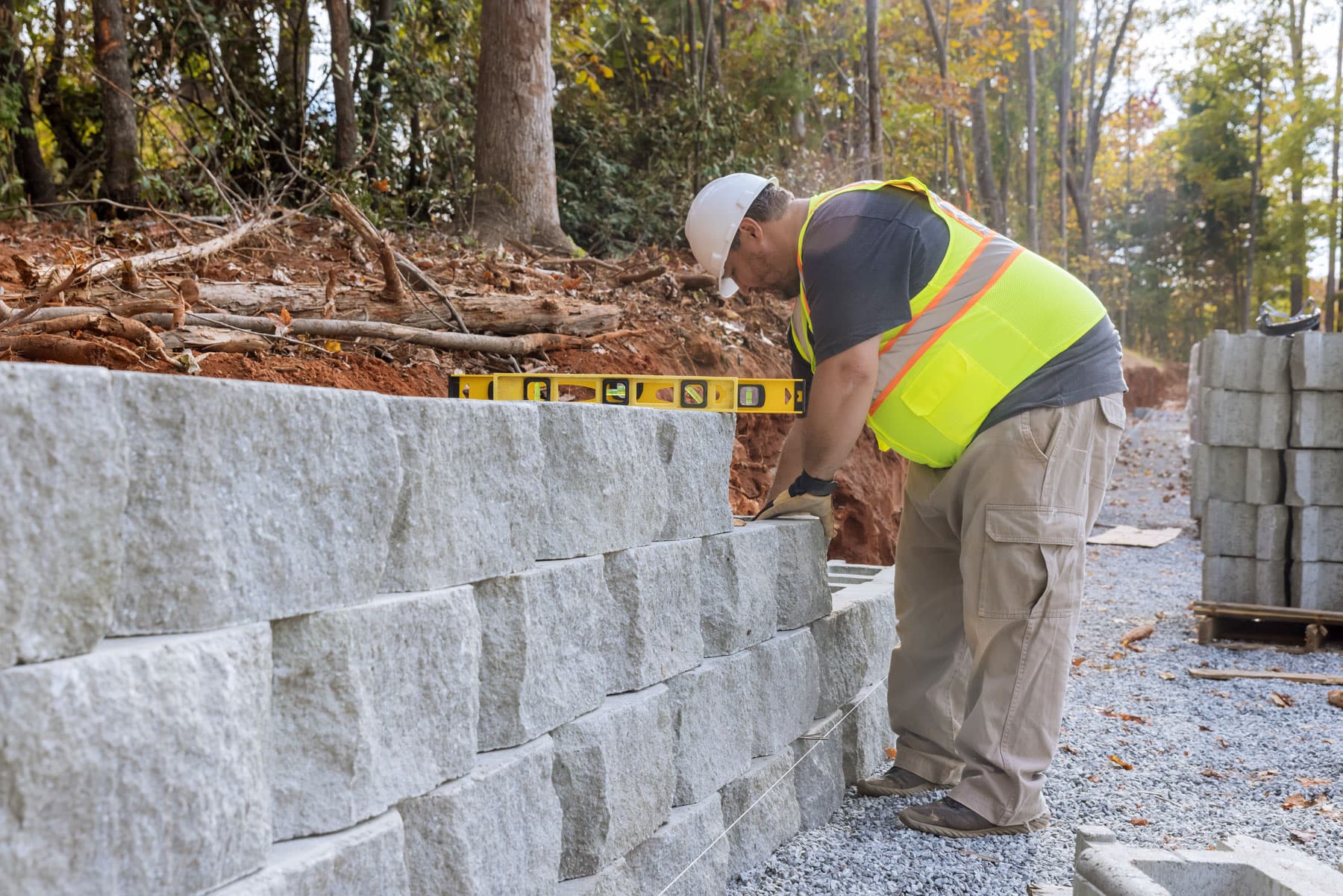
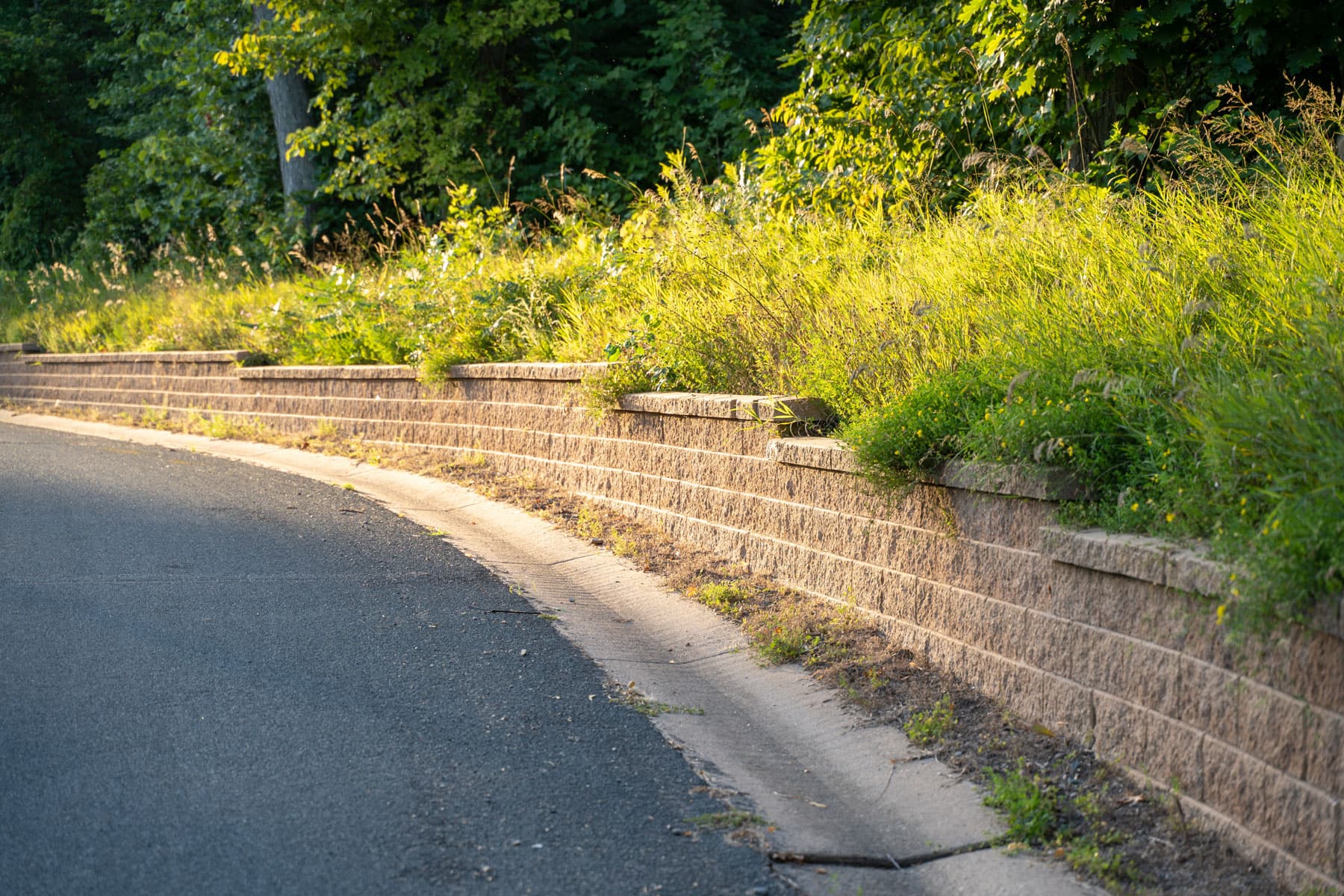
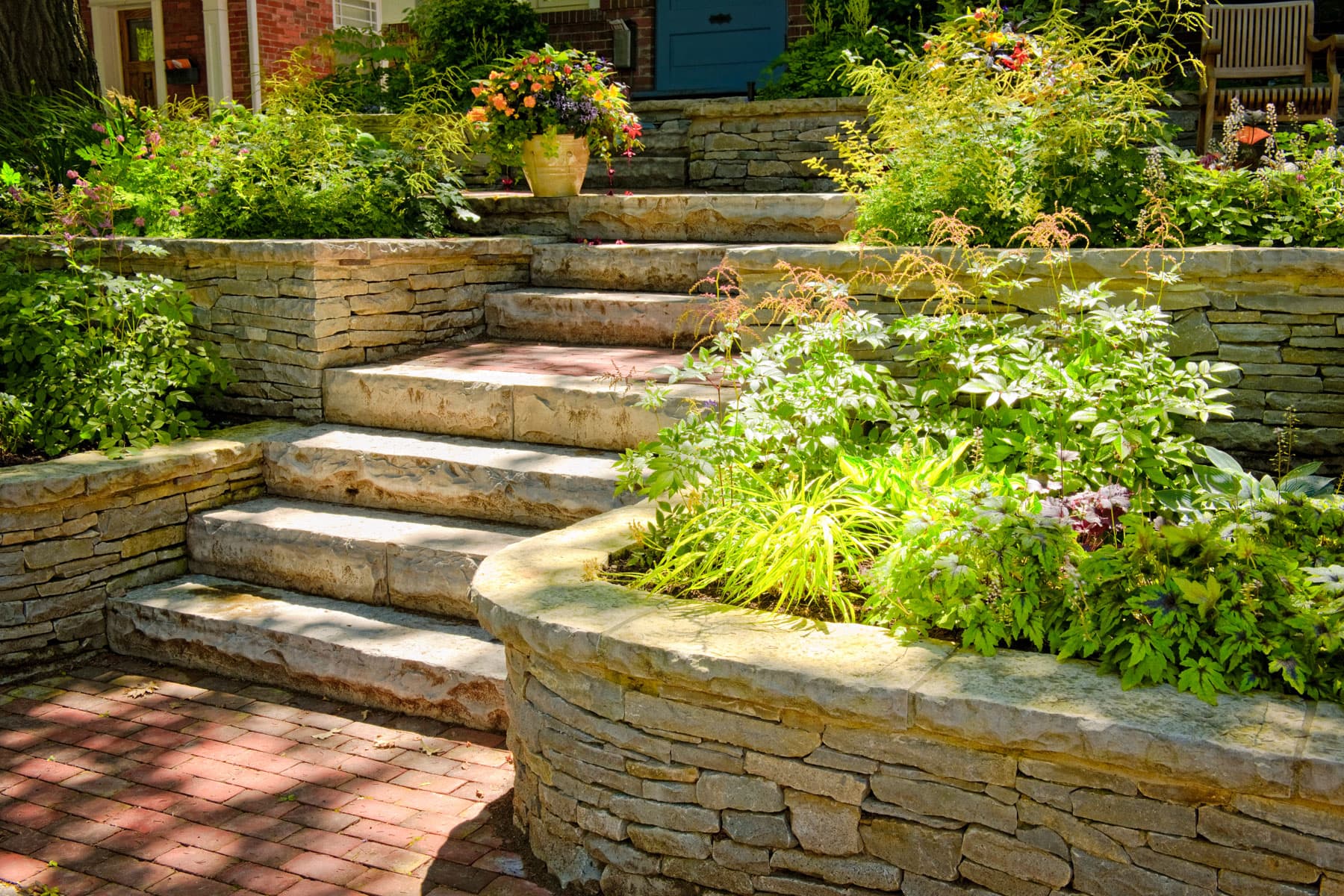
The standard replacement is segmental block. It's stronger, it's built to drain, and it'll outlast the timber it replaces by decades. For a more natural look, stone or boulder walls are great options. And on tight or tall sites, concrete may be the right call. The material choice comes down to the look you want and the site, but almost anything outlasts wood.
Can you just rebuild with timber again?
You can, and it'll be cheaper up front. But you'll be doing it all again in 15 or 20 years, and you'll pay for removal and rebuild twice. Most homeowners who've already replaced one rotted timber wall don't want to do it a third time. Spending a bit more once, on a material that lasts, almost always works out cheaper over the life of the wall.
A proper replacement isn't just swapping wood for block. We remove the old wall, re-grade the slope, build a compacted base, install real drainage, and add geogrid where the height calls for it. That's the difference between a wall that lasts and one that becomes the next homeowner's problem.