Why retaining walls fail in Surrey, and why it's almost always the drainage
Walk past a failed retaining wall and your eye goes to the blocks. The leaning, the cracks, the bulge. But the blocks are rarely the problem. In this climate, the thing that kills walls is water, and the way you deal with water is drainage. Get the drainage right and a wall lasts 50 years. Skip it and the same wall fails in 10 to 15, no matter how nice the blocks are.
What's actually happening behind a wall
A retaining wall holds back soil. When it rains, that soil soaks up water and gets heavier. If the water can't escape, it pools in the soil behind the wall and pushes. That push is constant, it builds up over a whole rainy season, and it's far stronger than most people imagine.
Hydrostatic pressure, in plain English
Water trapped behind a wall creates what engineers call hydrostatic pressure. Think of it as the weight of standing water pressing sideways. A wall might be built strong enough to hold dry soil, but add saturated soil plus water pressure and the load can more than double. The wall doesn't get a vote. Either the water has somewhere to go, or it pushes the wall over.
What a proper drainage system looks like
- 1A free-draining gravel chimney (clean clear crush) right behind the wall, so water falls straight down instead of soaking the soil.
- 2Filter fabric between that gravel and the native soil, so dirt fines don't clog the drainage layer over time.
- 3A perforated drain pipe at the base of the wall, sized for the length of the wall.
- 4That pipe daylighted to a real discharge point, somewhere downhill or into a storm system, not just buried and hoped for.
- 5Surface grading at the top so rainwater sheds away from the wall instead of pouring in behind it.
Every one of those steps matters. Miss the filter fabric and the gravel clogs. Miss the daylight point and the pipe fills up and does nothing. The system only works as a whole.
Why Surrey's climate and soil make this worse
We get long, wet winters, and a lot of local ground is glacial till with a tight clay cap. Clay holds water instead of letting it through, so the soil behind a wall stays saturated for months. That's the worst possible condition for a wall with no drainage. It's also why a wall that would survive in a dry climate fails here.
The shortcuts that cause failures
- No gravel chimney, just native soil packed straight against the back of the wall.
- A drain pipe with no outlet, so it fills with water and stays full.
- No filter fabric, so the drainage gravel silts up within a few years.
- A base that was never compacted, so the whole wall settles unevenly.
- No geogrid on a tall wall that needed it.
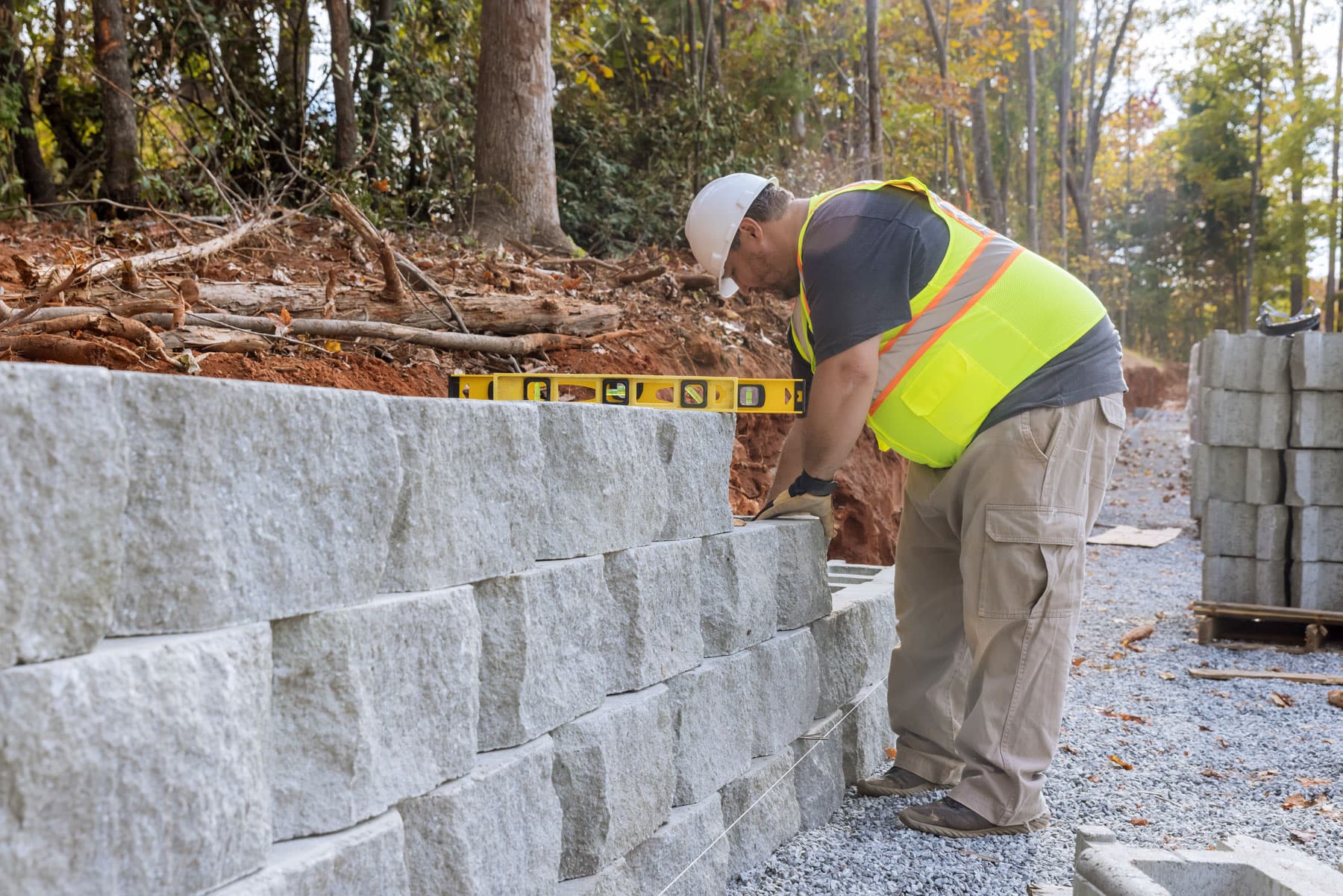
We build the half of the wall you can't see first. The blocks are the easy part.
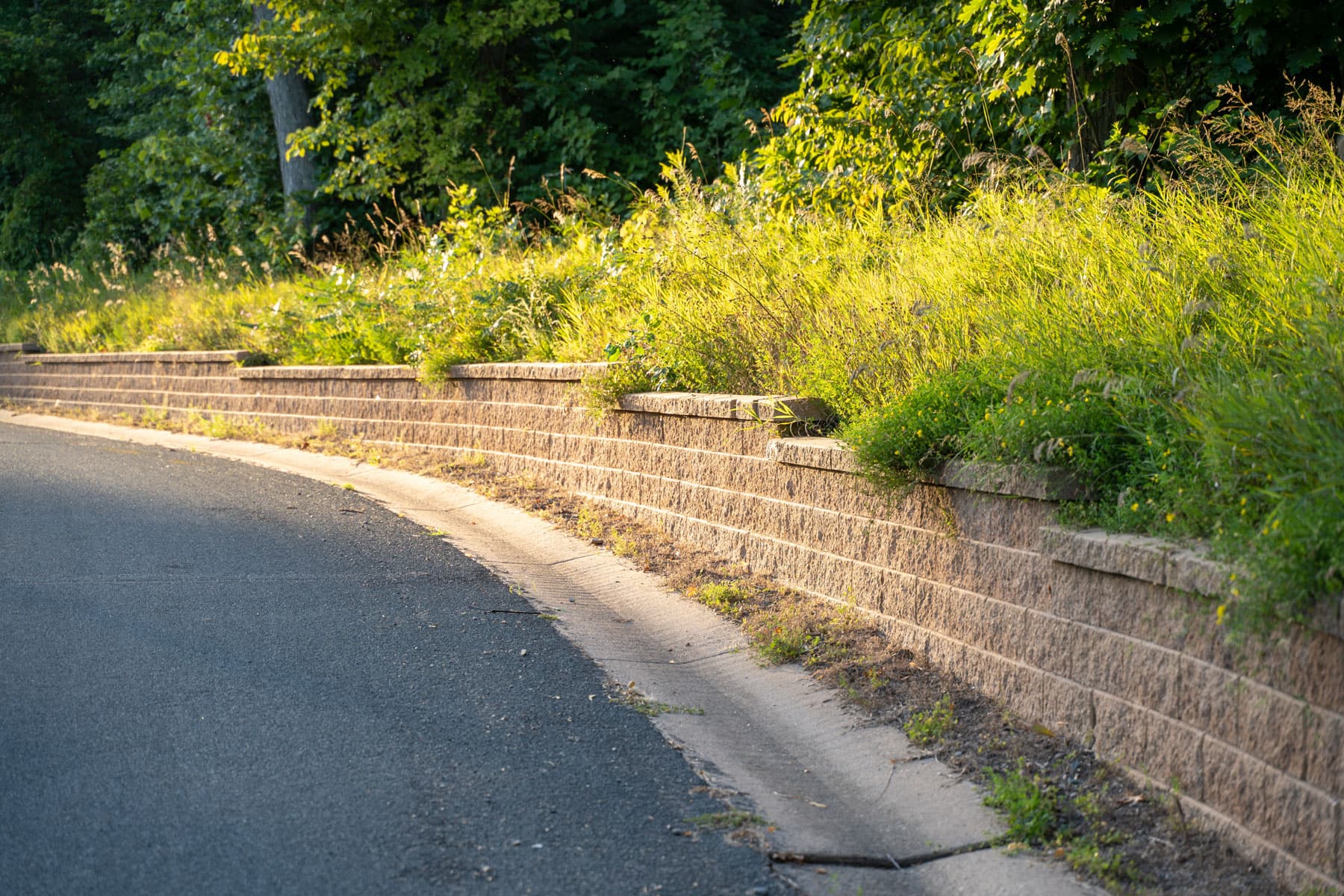
White streaks, moss, or constant damp on the face are early warnings that water is moving through the wall. It's worth fixing the drainage before the pressure does visible structural damage. Often we can excavate behind an existing wall, install a proper chimney and drain, and save the wall instead of rebuilding it.