Allan Block vs natural stone vs concrete: how to pick the right retaining wall
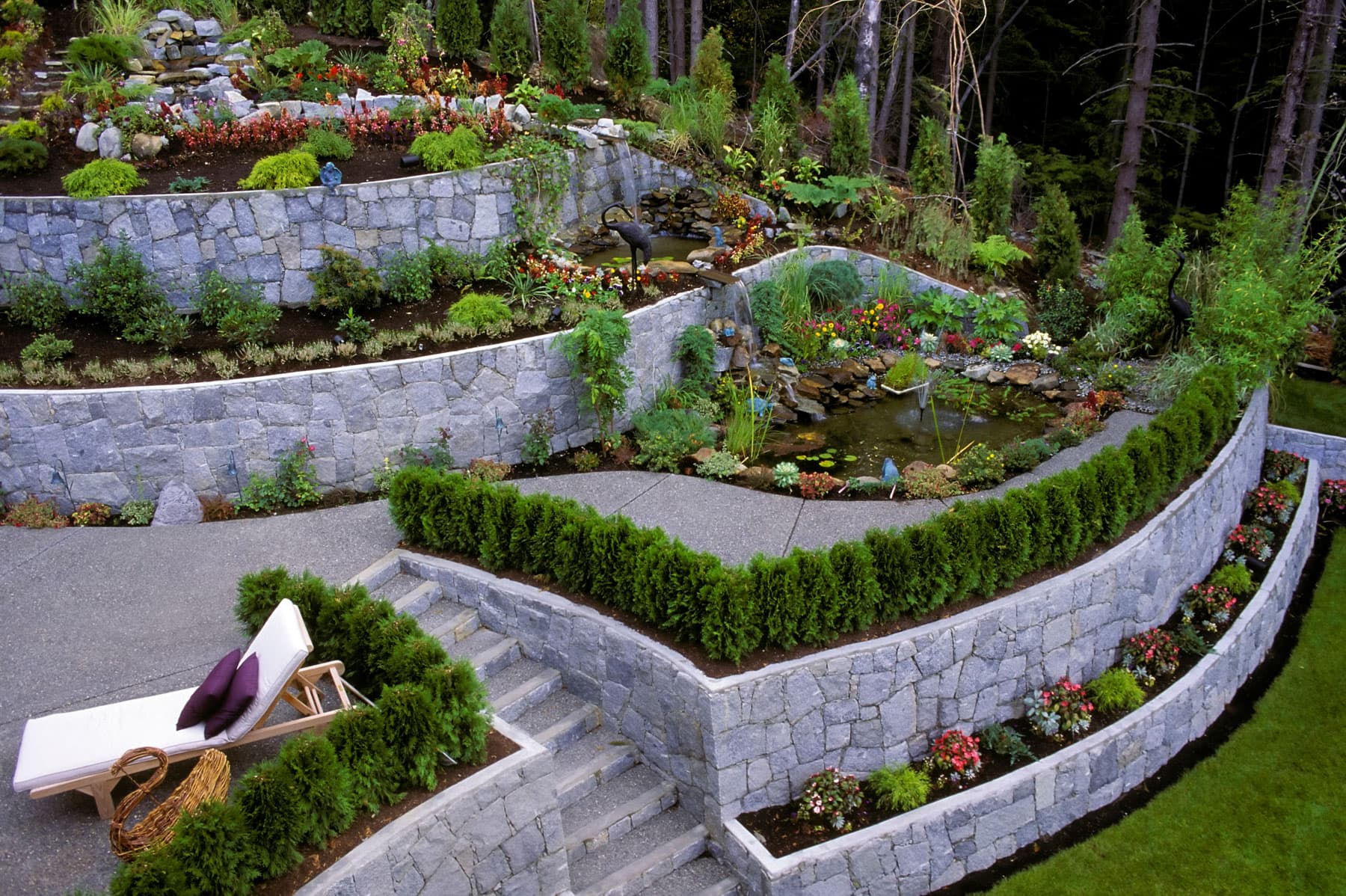
There's no single best retaining wall material. There's the right one for your slope, your soil, the look you're after, and what you want to spend. The four we build most are segmental block, natural stone, poured concrete, and boulder. Here's how they actually stack up, without the sales pitch.
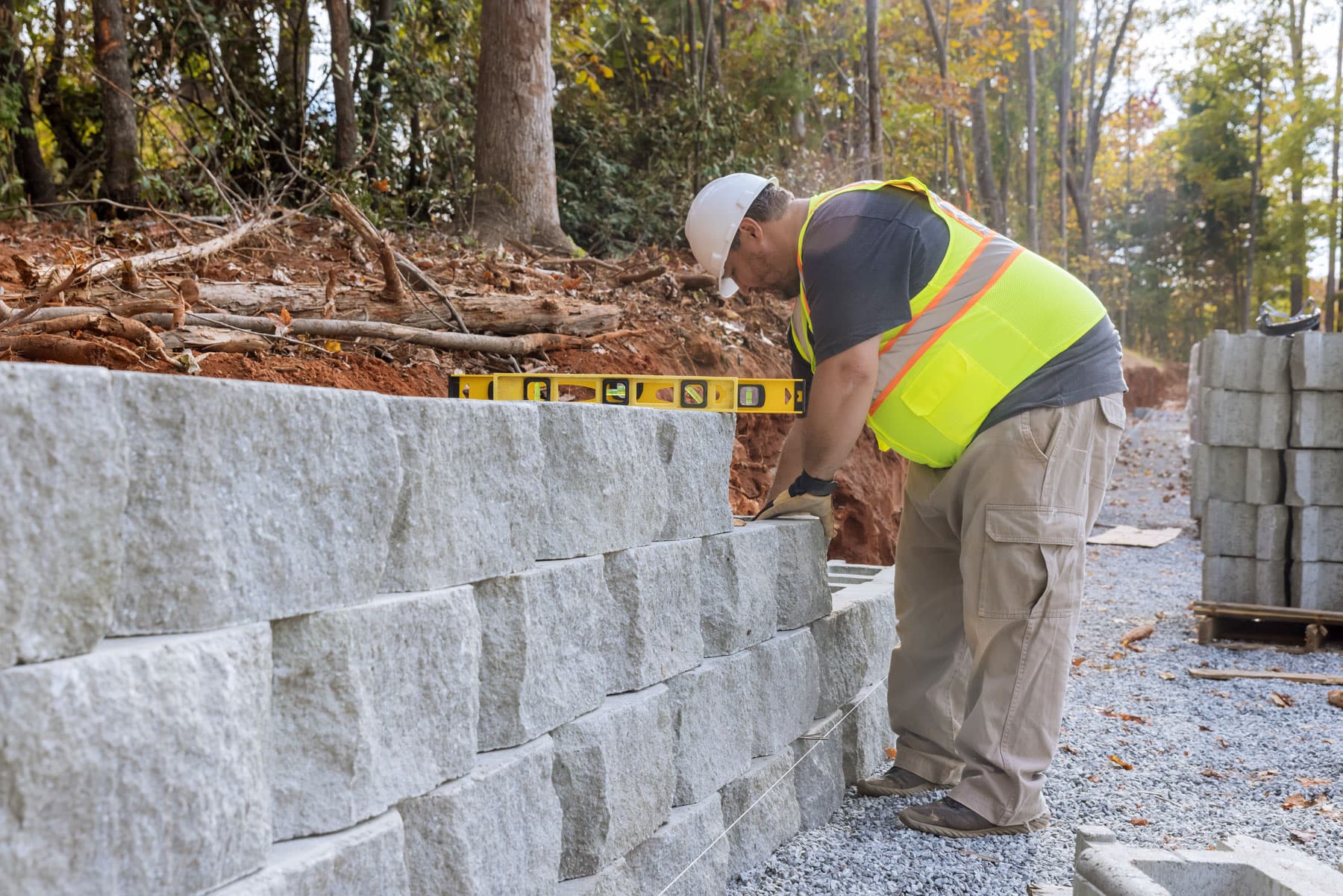
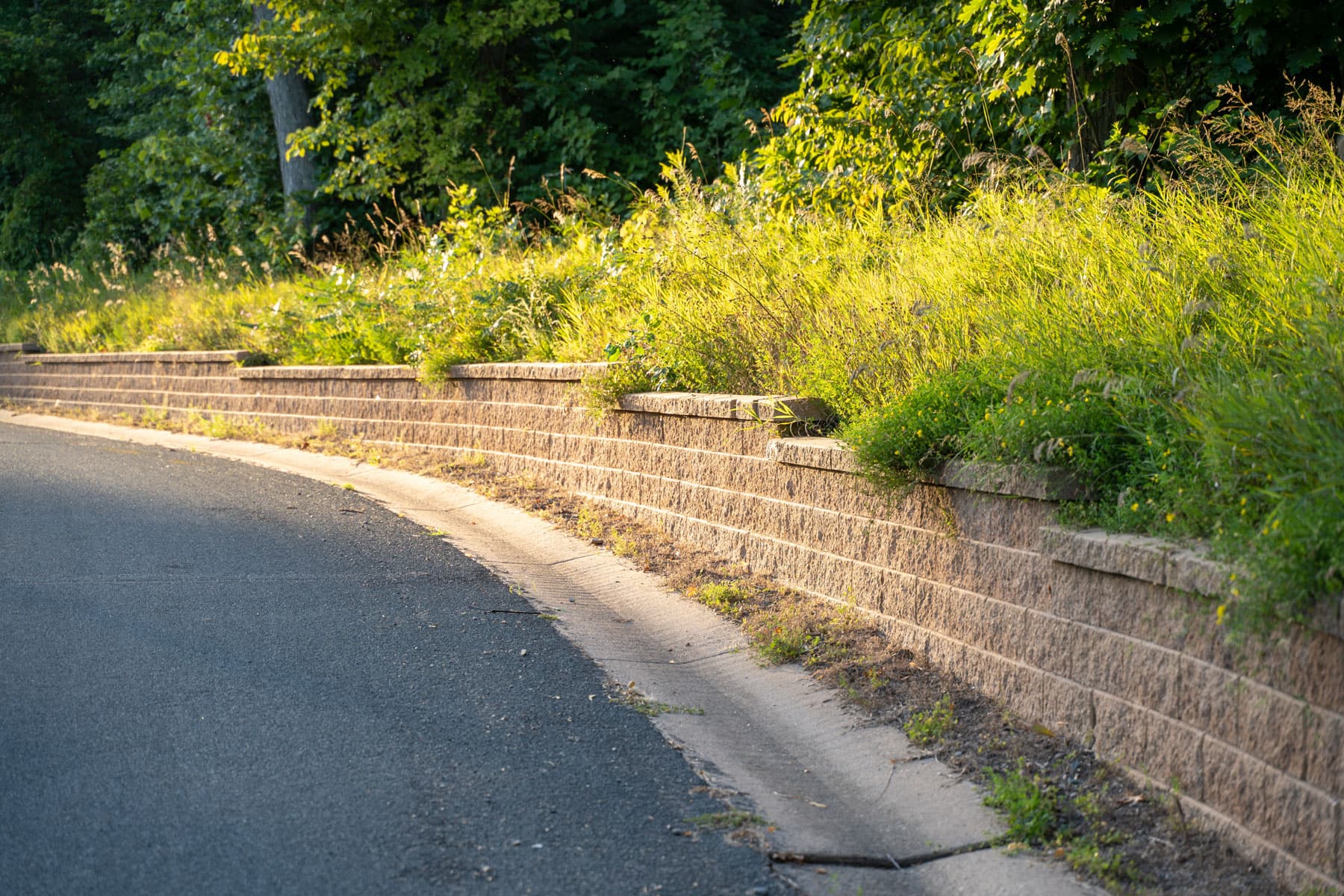
Segmental block (Allan Block, Versa-Lok)
This is the workhorse of residential walls in BC, and for good reason. The units are engineered to lock together, they're made to drain, and they handle our wet winters well. They come in a range of colours and finishes, so you can get a clean modern look or something more textured.
Block shines when you want a strong, good-looking wall at a sensible cost, and it scales up nicely. Add geogrid reinforcement and you can build tall, engineered walls with the same system. The main thing to know: a block wall is only as good as what's behind it. The drainage and the base matter more than the block itself.
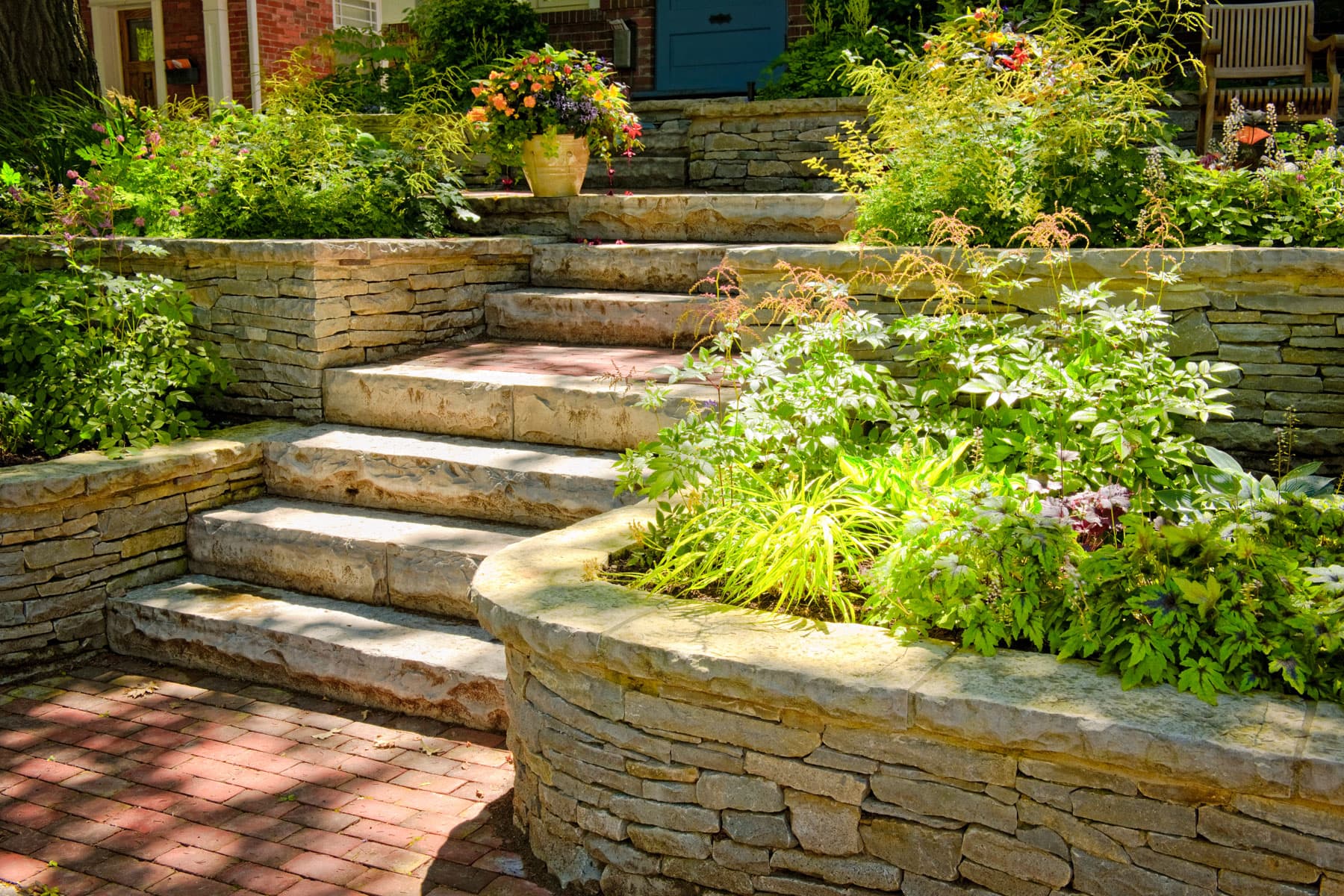
Natural stone
Nothing else looks like real stone, and nothing else ages like it either. A well-built dry-stack or mortared stone wall in basalt or BC fieldstone can last a century and look better at year 30 than the day it went in. It suits heritage and character homes, feature garden walls, and anyone who wants a wall that reads as part of the landscape.
The trade-off is craft and cost. Stone is hand-fit, so it takes skill and time, which makes it the priciest option per foot. For lower garden walls and feature areas, the payoff in curb appeal is usually worth it.
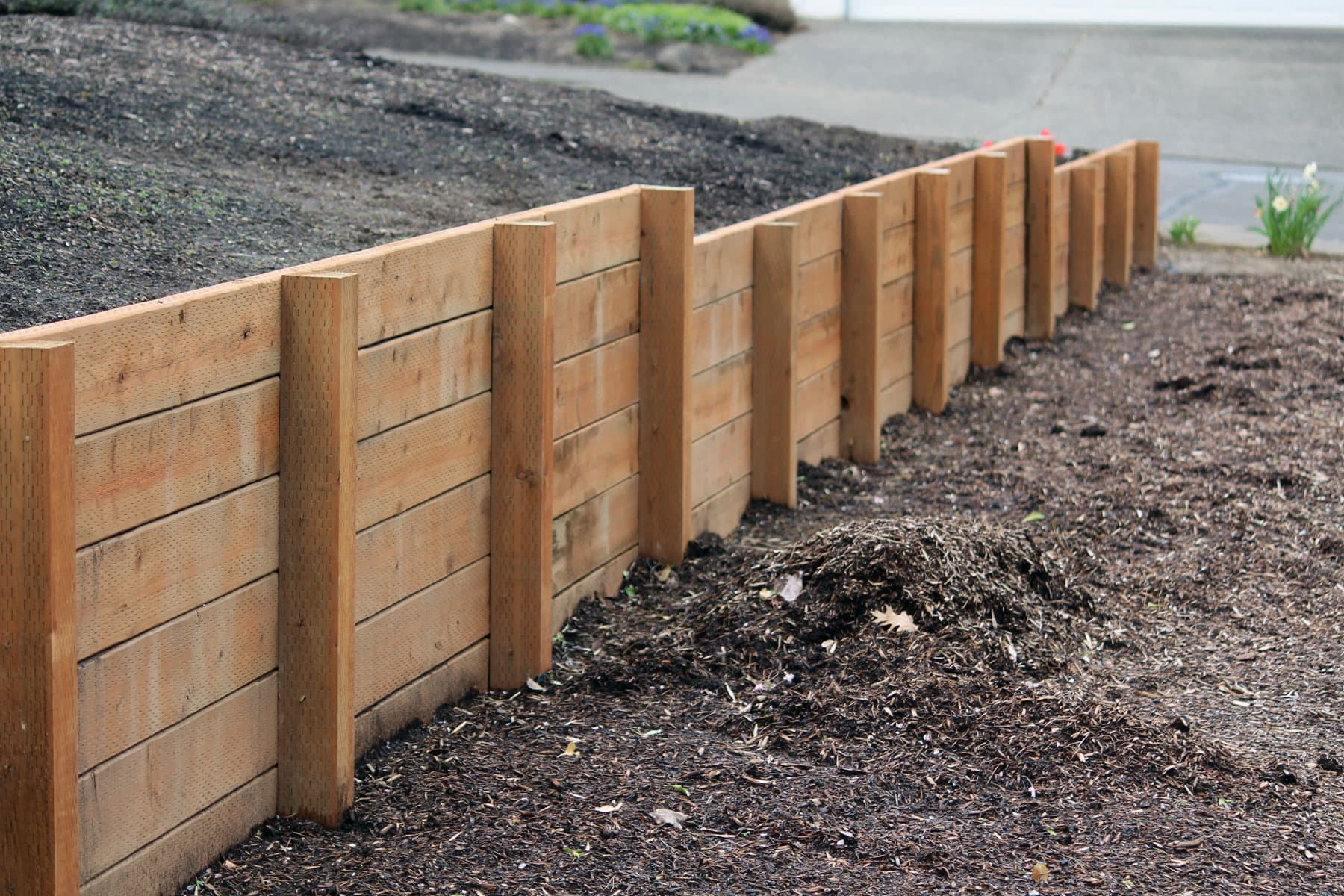
Poured concrete
When the site is tight or the wall is tall, concrete earns its keep. It's the thinnest strong wall you can build, so on a property line where every inch matters, concrete buys back room a block wall can't. It's also the call when the wall has to carry a real load, like a deck, a garage, or an addition sitting behind it.
Concrete walls need engineering, forming, rebar, and proper waterproofing on the soil side. Done right they're extremely strong and can be finished smooth and painted. Done wrong they crack and leak, so this isn't a place to cut corners.
Boulder and armour stone
When you've got serious grade to manage, boulders do work that block can't. We place one to four tonne stones with a machine, key them into the slope, and back-drain them like any built wall. They're common on acreage, view lots, and rural-feel properties, and they give a rugged, natural look that suits big landscapes.
Boulder walls need machine access and room to work, so they're not always practical in a tight city backyard. Where they fit, they go in fast and handle big height changes well.
So which one should you choose?
- Want the best balance of strength, looks, and cost? Segmental block.
- Building a feature wall, a character home, or something you want to last generations? Natural stone.
- Tight property line, a tall wall, or a wall carrying a structure? Poured concrete.
- Acreage, a big slope, or a rugged natural look with machine access? Boulder.
Most Surrey yards end up with segmental block because it does the most things well. But the right call depends on your specific site. If you tell us what you're trying to do, we'll recommend the material that fits your slope, your house, and your budget, even if it's not the most expensive option.
Related services
The work behind this guide. Here's how we can help.